Thin-Film Solar Panels
Thin-film solar panels are transforming the way we think about renewable energy. Lightweight, flexible, and efficient even in low-light conditions, they provide an innovative alternative to traditional silicon panels— particularly for homeowners and businesses looking for versatile installation options. As more people turn to sustainable alternatives, recognizing the benefits of thin-film technology becomes critical in making informed energy decisions. The operation of thin-film solar panels, their main advantages, and their ideal applications in the current changing solar landscape are all covered in this blog. For those considering using solar energy, partnering with the best solar panel installation company in Kerala ensures expert guidance and long-term performance.
What are Thin-film Solar Panels and What is Their Appearance?
Thin-film solar panels are a type of current photovoltaic technology that involves depositing extremely thin layers of semiconductor materials such as cadmium telluride (CdTe), amorphous silicon (a-Si), or copper indium gallium selenide (CIGS) onto a solid surface such as glass, metal, or plastic. These layers are much thinner than those in traditional silicon panels, making thin-film panels flexible, lightweight, and simple to install in spaces where solid panels may not fit.
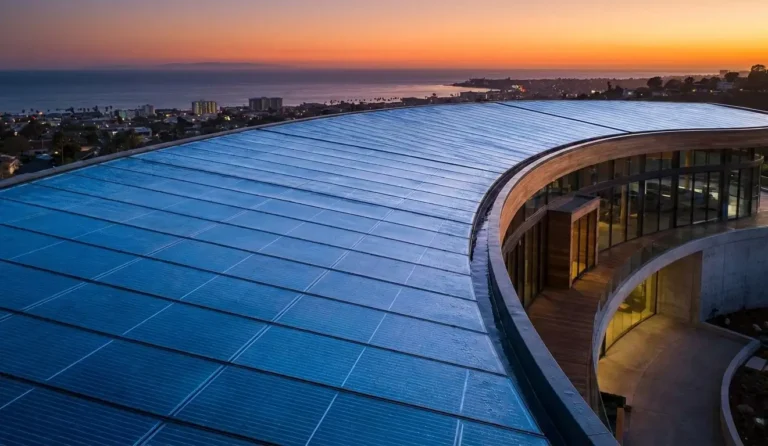
Thin-film solar panels usually have a blue-toned surface that is rough or speckled. The ultra-thin semiconductor coatings and the manufacturing process are responsible for this unique appearance. They typically appear smoother and more uniform than crystalline silicon screens, which have visible cell grids. Their elegant shape makes them ideal for modern architectural applications, curved surfaces, and huge commercial installations.
All things considered, thin-film panels provide a trendy, versatile, and effective substitute for a range of solar energy requirements.
What are Thin-film Solar Panels Made Of?
Ultra-thin photovoltaic materials are layered onto a solid backing surface to make thin-film solar panels. These materials are only a few micrometers thick; therefore, the panels are lighter and more flexible than conventional silicon-based modules. The essential elements consist of:
- Cadmium Telluride (CdTe): One of the most common materials used in thin-film technology, CdTe panels are cost-effective and perform well in high temperatures and low-light conditions.
- Amorphous Silicon (a-Si): Similar to traditional silicon but non-crystalline, a-Si is deposited in extremely thin layers. These panels are lightweight and often used in small devices or building-integrated systems.
- Copper Indium Gallium Selenide (CIGS): A high-efficiency thin-film option made from a combination of copper, indium, gallium, and selenium. CIGS panels are flexible and suitable for a wide variety of applications, including curved surfaces.
- Substrate or Backing Material: This is typically glass, metal, or flexible plastic, providing structure and durability for the thin photovoltaic layers.
When combined, these components produce a solar panel that is flexible, lightweight, aesthetically pleasing, and effective in a variety of environmental settings.
What are the Advantages and Disadvantages of Thin-film Solar Panels?
Advantages of Thin-film Solar Panels?
- Lightweight and Flexible: Since the photovoltaic layers are extremely thin, these panels are much lighter and can be installed on surfaces where traditional panels are unsuitable.
- Better Performance in Low-Light and High Temperatures: Thin-film panels maintain efficiency even during cloudy weather or in hotter climates, making them reliable in diverse conditions.
- Sleek and Uniform Appearance: Their smooth, continuous surface with a blue-toned, grainy texture offers an aesthetically pleasing look, especially for modern architectural designs.
- Easier and Faster Installation: The flexible and lightweight nature allows for simpler handling, reducing installation time and labor.
- Cost-Effective for Large Projects: Thin-film technology is often more affordable per panel, making it ideal for large-scale commercial roofs, solar farms, or industrial spaces.
Disadvantages of Thin-film Solar Panels?
- Lower Efficiency Compared to Traditional Silicon Panels: They generally produce less power per square meter, which means you need more surface area to generate the same output.
- Larger Space Requirement: Due to lower efficiency, they are less suitable for small rooftops or space-constrained installations.
- Shorter Lifespan and Lower Durability: While improving over time, thin-film panels typically don’t last as long as crystalline silicon modules.
- Higher Degradation Rate: Thin-film systems may lose efficiency faster over the years compared to standard solar panels.
- Limited Availability: Not all installers offer thin-film panels, and choices may be fewer compared to widely available silicon panels.
What is the Typical Efficiency of Thin-film Solar Panels and How Do They Perform in Different Conditions (e.g., Heat, Shade)?
Thin-film solar panels generally have lower efficiency compared to traditional crystalline silicon panels. Although their efficiency is modest, thin-film technology compensates with impressive performance under challenging environmental conditions.
Performance in Different Conditions
Heat Tolerance
- Thin-film solar panels perform better in high temperatures than traditional silicon panels.
- They have a lower temperature coefficient, meaning their efficiency drops much more slowly as the temperature rises.
- This makes them ideal for hot climates or large open areas where heat buildup is common.
Shade and Low-Light Performance
- Thin-film panels also perform well in cloudy, shaded, or low-light conditions because:
- Their semiconductor materials absorb a broader spectrum of light.
- They can generate energy earlier in the morning and later in the evening compared to silicon panels.
Diffused Light Conditions
- Thin-film panels are efficient at capturing indirect light, making them suitable for regions with frequent overcast or inconsistent sunlight.
Does Temperature Affect the Performance of Thin-Film Solar Panels?
Yes, temperature has an impact on the performance of thin-film solar panels—but they handle heat much better than typical crystalline silicon panels. As temperatures rise, all solar panels lose some efficiency, but thin-film technology is notably less affected.
Thin-film panels have a lower temperature coefficient, meaning their power output declines more slowly at high temperatures. This makes them ideal for:
- Hot climates
- Industrial rooftops with metal sheets
- Large open installations exposed to direct sunlight
While high temperatures can still affect overall performance, thin-film solar panels remain among the most heat-tolerant solar technologies, providing consistent, dependable output even during peak summer conditions.
Key Differences Between Thin-Film, Polycrystalline and Monocrystalline Solar Panels (Efficiency, Cost, Lifespan)?
When selecting the right solar solution, comprehending how each panel type differs is crucial. Businesses like Neal Solar, the best solar panel company in Kochi Kerala, assist customers in picking the best option based on efficiency, budget, and long-term value. Here’s a breakdown of how the three major solar panel types compare:
Efficiency
Efficiency-Monocrystalline Solar Panels
- Highest efficiency: 18%–22%
- Made from pure single-crystal silicon, allowing electrons to move freely.
- Best choice for limited roof space.
Efficiency-Polycrystalline Solar Panels
- Moderate efficiency: 15%–17%
- Made from multiple silicon crystals, which slightly reduces energy conversion.
- Great for homes with enough space and a balanced budget.
Efficiency-Thin-Film Solar Panels
- Lower efficiency: 6%–14%
- Efficiency depends on type (a-Si, CdTe, or CIGS).
- Better performance in high heat and low-light conditions despite lower ratings.
Cost
- Monocrystalline: Most expensive due to complex manufacturing and high efficiency.
- Polycrystalline: More affordable than mono, offering a good balance of cost and performance.
- Thin-Film: Cheapest option per panel, ideal for large commercial installations or projects requiring flexible, lightweight modules.
Lifespan
Monocrystalline:
- Longest lifespan: 25–30+ years
- Slowest degradation rate.
Polycrystalline:
- Long lifespan: 25 years on average
- Slightly faster degradation than monocrystalline.
Thin-Film:
- Shorter lifespan: 15–20 years
- Higher degradation rate but still dependable for specific environments.
Beyond Silicon: How Thin-Film Technology is Changing Solar Power
Thin-film solar technology continues to redefine the boundaries of what solar energy can accomplish, expanding the industry beyond the boundaries of traditional silicon panels. Instead of using thick, rigid crystalline silicon cells, thin-film panels employ ultra-thin layers of semiconductor materials, making them lighter, more versatile, and easier to incorporate into a variety of surfaces and structures.
This shift is transforming solar power in several key ways:
- New Possibilities for Flexible Installations: Thin-film panels can be applied to curved roofs, building facades, vehicles, and even portable devices—places where traditional panels simply cannot fit.
- Improved Performance in Real-World Conditions: Their excellent tolerance to heat and ability to perform in low-light or diffused sunlight make thin-film systems more reliable in challenging environments.
- Advancements in Building-Integrated Photovoltaics (BIPV): Thin-film materials blend seamlessly into modern architecture, enabling solar windows, solar shingles, and aesthetically pleasing energy-generating surfaces.
- Lower Production Costs: Manufacturing thin-film panels requires less material and energy, paving the way for more affordable solar solutions in large-scale projects.
Thin-film technology is becoming a potent substitute as the solar industry develops, opening up new applications for solar energy and pushing innovation beyond the limits of traditional silicon.
What is the Current Market Status of Thin-Film Solar Panels and What are Their Best Applications?
Thin-film solar panels have established a strong presence in the global renewable energy sector, particularly in commercial and utility-scale projects. Although classic monocrystalline panels dominate the residential rooftop market, thin-film technologies such as CdTe and CIGS are gaining popularity due to their flexibility, cheaper manufacturing costs, and superior performance in real-world situations.
Best Applications of Thin-Film Solar Panels
- Large Commercial and Industrial Rooftops: Their lightweight nature makes them ideal for buildings that cannot support heavy crystalline panels.
- Solar Farms and Utility Projects: Thin-film performs well in heat and diffuse light, maximizing output in expansive outdoor installations.
- Building-Integrated Photovoltaics (BIPV): Used in solar windows, facades, curtain walls, and shading systems—allowing energy generation without compromising design.
- Portable and Mobile Solar Solutions: Perfect for solar chargers, camping equipment, electric vehicles, and wearable devices due to their flexibility and low weight.
- Curved or Irregular Surfaces: Thin-film panels can be installed on curved rooftops, RVs, buses, and other non-flat structures where rigid panels cannot fit.
What is the Cost Per Watt for Thin-Film Solar Panels?
The cost per watt for thin-film solar panels is typically lower than conventional monocrystalline or polycrystalline panels, making them an attractive option for large-scale or budget-focused installations. On average, the cost per watt for thin-film panels ranges from ₹25 – ₹45 per watt.
How to Install Thin Film Solar Panels?
Installing thin-film solar panels is easier and quicker than conventional solar modules due to their lightweight and flexible design. The procedure usually entails prepping the surface, applying adhesive or mounting tapes, and attaching the panels directly to metal roofs, flat surfaces, or building-integrated structures. Electrical connections are then made using connectors and inverters to link the panels to the power system. Employing qualified installers is advised to guarantee optimal efficiency and long-term performance because thin-film panels need to be properly aligned and weatherproofed.
Can Thin-Film Solar Panels Be Recycled?
Yes, thin-film solar panels can be recycled, though the procedure differs from traditional silicon modules. These panels are composed of materials that may be separated and recovered using specific recycling techniques, such as amorphous silicon, CIGS, or cadmium telluride. It is frequently possible to recover up to 90% of the semiconductor material and glass substrate. As recycling technologies progress, the industry becomes more efficient at safely processing thin-film panels, lowering environmental impact and promoting sustainable solar production.
Are Thin-film Solar Panels a Good Investment for Homeowners?
Thin-film solar panels can be an affordable option for homeowners, particularly on big, lightweight, or unusual rooftops. They work well in excessive heat, partial shade, or low-light situations and are easier to install than standard panels. However, their lower efficiency and shorter lifespan mean more space is needed to match the output of crystalline panels. Thin-film solar panels are an inexpensive and adaptable solution for homes with small energy requirements or lots of roof space.
Final Thoughts
Thin-film solar panels are revolutionizing solar energy by providing affordable, flexible, and lightweight substitutes for conventional silicon-based modules. They are great for homeowners, commercial areas, and large-scale solar projects due to their high heat, low light, and unique mounting capabilities. Working with professionals like Neal Solar, a reputable solar energy company in Kerala, guarantees expert installation, maximum efficiency, and long-term dependability for those wishing to implement this cutting-edge technology. Choosing thin-film solar today is a wise decision toward a more sustainable and energy-efficient future.
FAQs
Are Thin-Film Solar Panels Good?
Yes, thin-film solar panels are a good option in the right situations. They work well in hot, dark, and gloomy environments and are lightweight and flexible. While they have lesser efficiency and a shorter lifespan than typical silicon panels, they are less expensive and better suited for large roofs, irregular surfaces, or projects that require flexibility.
Are Thin-Film Solar Panels Cheaper?
Yes, thin-film solar panels are generally cheaper than traditional silicon panels because they use less material and are easier to manufacture. However, they may have lower efficiency, so you might need more panels to produce the same energy, which can affect overall costs.
How Much Do Thin-Film Solar Panels Cost?
In India, prices usually range from ₹20 to ₹30 per watt. Keep in mind that the total cost also depends on installation, roof type, and any local incentives or subsidies.