Solar Thermal Energy - Everything You Need to Know
Solar Thermal Energy is one of the most efficient and environmentally friendly ways to capture the sun’s power for daily energy requirements. By converting sunlight into heat energy, solar thermal systems are extensively utilized for water heating, space heating, and industrial applications, assisting homes and businesses in lowering energy costs while lowering their carbon footprint. As the demand for clean and dependable energy solutions continues to grow, knowing how solar thermal energy operates and where it can be employed efficiently has become more crucial than ever.
When it comes to specialist advice on solar thermal energy, Neal Solar stands out as a reliable and authorized name in the business. Neal Solar is well-equipped to address all of your inquiries regarding solar thermal systems thanks to its extensive technical expertise, years of experience, and qualified personnel. Their track record includes countless successful installations in the residential, commercial, and industrial sectors, all designed for optimal efficiency and long-term performance. This established competence has won Neal Solar recognition as the best solar energy company in Kerala, establishing them as a trustworthy source for precise insights and practical solutions in the field of solar thermal energy.
What is Solar Thermal Energy
Solar thermal energy is a renewable energy technique that absorbs heat from the sun and uses it for practical purposes such as water heating, space heating, electricity generation, and manufacturing operations. Instead of converting sunlight directly into electricity like solar photovoltaic (PV) systems, solar thermal systems concentrate on absorbing solar radiation and transforming it into usable heat.
These systems usually employ solar collectors—such as flat plate collectors, evacuated tube collectors, or concentrating collectors—to absorb sunlight. After that, the heat is transferred to a fluid (such as water, air, or thermal oil) that can be used right away or stored for later. Solar thermal energy is frequently employed in residential houses for hot water, commercial buildings for heating, and large-scale power plants to create electricity via steam turbines.
By lowering dependence on fossil fuels, solar thermal energy provides a clean, cost-effective, and sustainable solution for meeting energy needs, particularly in regions with high solar exposure like Kerala.
How Do Solar Thermal Energy Work
Solar thermal energy captures heat from the sun and converts it into thermal energy that may be used to heat or generate electricity. Instead of producing electricity directly, the system concentrates on obtaining and utilising solar heat efficiently. Here is a step-by-step breakdown of the procedure:
- Sunlight Absorption: Solar collectors are put on rooftops or in open locations where they receive the most sunlight. By absorbing solar energy, these collectors produce heat.
- Heat Transfer: A heat-transfer fluid, such as water, air, or thermal oil, passing through the collectors, is warmed by the absorbed heat. Heat is transferred from the collector to the system via this fluid.
- Heat Storage (Optional): The heated fluid can be kept in insulated tanks or thermal storage devices, allowing the energy to be used even when there is no sunlight, such as at night or on overcast days.
- Energy Utilisation: The stored or direct heat is used for a variety of purposes, including hot water supply, space heating, industrial activities, and, in large-scale systems, producing steam to drive turbines and generate power.
- Heat Recycling: After releasing heat, the fluid is recirculated back to the collectors for reheating, resulting in a continuous and efficient cycle.
Key Components in a Solar Thermal Energy
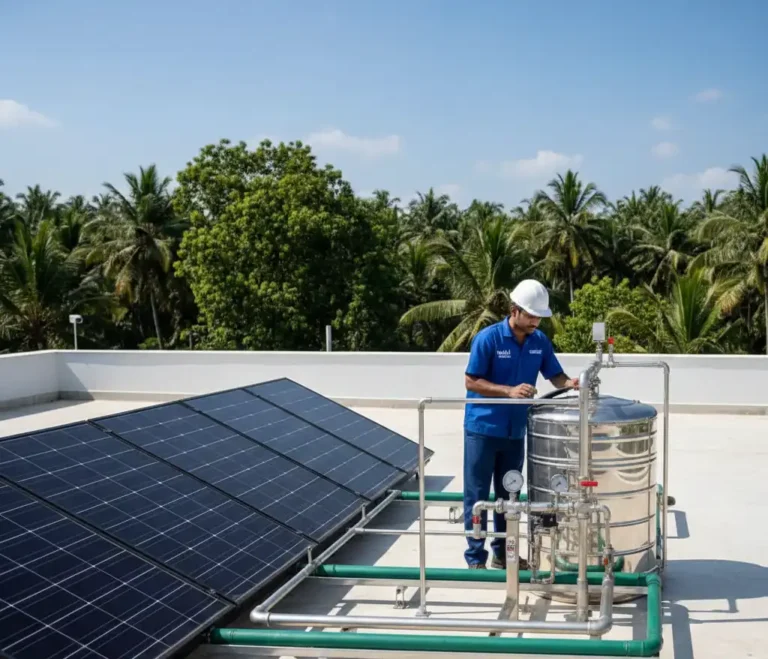
- Solar Collectors: Solar collectors are the heart of the system. They turn sunlight into heat by absorbing it. Common types include flat plate collectors, evacuated tube collectors, and concentrating collectors, each suited for different temperature and usage requirements.
- Heat Transfer Fluid: This fluid (such as water, antifreeze solution, air, or thermal oil) flows through the collectors and carries the absorbed heat to other parts of the system.
- Heat Exchanger: The heat exchanger transfers thermal energy from the heat transfer fluid to the water or system being heated, without allowing the fluids to mix.
- Storage Tank: An insulated storage tank stores the heated water or thermal energy for later use, ensuring a continuous supply even when sunlight is unavailable.
- Circulation System: Pumps or natural circulation mechanisms move the heat transfer fluid through the collectors and the system efficiently.
- Controller Unit: The controller monitors temperatures and manages the operation of pumps and valves to optimise performance and prevent overheating.
- Backup Heating System (Optional): A backup heater ensures an uninterrupted hot water or heat supply during periods of low sunlight or high demand.
Applications of Solar Thermal Energy
- Domestic Water Heating: One of the most common uses of solar thermal energy is heating water for homes and apartments. It provides a reliable supply of hot water for bathing, cooking, and cleaning while significantly reducing electricity or gas consumption.
- Space Heating: Solar thermal systems can be used for space heating in homes, offices, and commercial buildings by supplying warm air or hot water to radiators and underfloor heating systems.
- Industrial Process Heating: Many industries require heat for processes such as washing, drying, pasteurisation, and pre-heating. Solar thermal energy offers a cost-effective and sustainable solution for these medium- and high-temperature applications.
- Solar Thermal Power Generation: In large-scale installations, concentrated solar thermal systems generate steam to drive turbines and produce electricity, especially in areas with high solar radiation.
- Swimming Pool Heating: Solar thermal systems are widely used to maintain comfortable water temperatures in swimming pools, extending their usability throughout the year.
- Agricultural Applications: Solar thermal energy is used in agriculture for crop drying, greenhouse heating, and dairy operations, helping farmers improve efficiency while reducing fuel costs.
- Commercial and Institutional Use: Hotels, hospitals, hostels, and educational institutions use solar thermal systems to meet large hot water demands efficiently and sustainably.
Types of Solar Thermal Energy
Solar thermal energy systems are categorized based on their design, operating temperature, and use. Each variety is appropriate for a specific energy requirement, ranging from domestic use to large-scale power generation. The primary categories of solar thermal energy systems are listed below:
- Flat Plate Collectors (FPC): Flat plate collectors are the most popular solar thermal systems for household and small commercial use. They have an absorber plate, a clear cover, and insulation, making them suitable for low to medium temperature applications such as home water heating.
- Evacuated Tube Collectors (ETC): Evacuated tube collectors employ vacuum-sealed glass tubes to reduce heat loss, allowing them to run efficiently even in cool or cloudy weather. They are appropriate for applications that require higher temperatures and more efficiency.
- Concentrating Solar Thermal Systems (CST): These systems use mirrors or lenses to focus sunlight on a small area, resulting in extremely high temperatures. Large-scale industrial applications and solar thermal power plants are their primary uses.
- Parabolic Trough Systems: A type of concentrating system, parabolic troughs use curved mirrors to focus sunlight onto a receiver tube, heating a fluid that is later used to produce steam for electricity generation.
- Solar Power Towers: Solar power towers use an array of mirrors (heliostats) to direct sunlight toward a central receiver at the top of a tower, producing extremely high temperatures for power generation.
- Solar Dish Systems: Solar dish systems use dish-shaped mirrors to concentrate sunlight onto a focal point, achieving high efficiency and temperatures suitable for small-scale power generation and specialised applications.
Benefits of Using Solar Thermal Energy
Solar thermal energy has various benefits, making it an intelligent and sustainable alternative for residential, commercial, and industrial energy requirements. It provides dependable performance while promoting environmental and financial advantages by utilizing the sun’s heat. The main advantages of employing solar thermal energy are listed below:
- Renewable and Eco-Friendly: Solar thermal energy uses sunlight, a renewable resource, reducing dependence on fossil fuels and lowering greenhouse gas emissions.
- Lower Energy Costs: By significantly reducing electricity or gas consumption for heating, solar thermal systems help cut monthly energy bills and offer long-term savings.
- High Energy Efficiency: Solar thermal systems are highly efficient at converting sunlight into usable heat, often achieving higher efficiency rates compared to other renewable technologies.
- Reduced Carbon Footprint: Using solar thermal energy minimises carbon emissions, contributing to cleaner air and a healthier environment.
- Low Maintenance Requirements: With fewer moving parts, solar thermal systems require minimal maintenance and have a long operational lifespan.
- Reliable Energy Supply: When combined with thermal storage or backup systems, solar thermal energy ensures a consistent supply of hot water and heat, even during low sunlight periods.
- Versatile Applications: Solar thermal energy can be used for domestic water heating, space heating, industrial processes, and power generation, making it suitable for various sectors.
- Increased Property Value: Installing solar thermal systems can enhance property value by improving energy efficiency and sustainability credentials.
- Ideal for Sunny Regions: Solar thermal energy performs exceptionally well in regions with abundant sunlight, making it a practical solution in climates like Kerala.
Drawbacks in Solar Thermal Energy
- High Initial Installation Cost: The upfront cost of installing solar thermal systems, including collectors, storage tanks, and piping, can be relatively high compared to conventional heating systems.
- Weather Dependent: Solar thermal energy relies on sunlight, so performance may be reduced during cloudy days, rainy seasons, or extended periods of low solar radiation.
- Space Requirement: Solar collectors require sufficient roof or ground space for effective installation, which may be a challenge in densely populated or space-limited areas.
- Limited Energy Production at Night: Solar thermal systems cannot generate heat at night without stored energy, making thermal storage or backup systems necessary.
- Maintenance of Components: Although maintenance is generally low, components like pumps, heat transfer fluids, and storage tanks may require periodic checks and servicing.
- Heat Loss Issues: Inefficient insulation or poor system design can lead to heat loss during storage or transfer, reducing overall efficiency.
- Not Ideal for All Locations: Areas with limited sunlight or unsuitable installation angles may experience reduced system performance.
Difference Between Solar Thermal Energy and Photovoltaic Energy
Solar Thermal Energy: Solar thermal systems capture sunlight and convert it into heat energy. This heat is utilized for water heating, space heating, industrial activities, and large-scale power generation using steam turbines.
Photovoltaic (PV) Energy: Photovoltaic systems convert sunlight directly into electricity using solar panels made of semiconductor materials. The generated electricity can be used to power electrical appliances, lighting, and equipment, or it can be stored in batteries for future use.
Key Differences at a Glance
- Energy Output: Solar thermal systems produce heat, while Photovoltaic systems generate electricity.
- Primary Use: Solar Thermal is ideal for heating applications; PV is best for powering electrical devices and systems.
- Efficiency: Solar Thermal systems typically have higher efficiency in converting sunlight into usable heat compared to PV panels, which convert sunlight into electricity.
- Storage Method: Solar Thermal uses thermal storage tanks, whereas PV systems rely on batteries or grid connectivity.
- Application Scale: Solar Thermal is widely used in hot water and industrial heating, while PV systems are popular for rooftop and grid-connected electricity generation.
Neal Solar offers expert guidance on both solar thermal and photovoltaic systems, helping customers choose the most efficient and cost-effective system tailored to their specific needs. With authorized certifications, modern technology, and a track record of successful installations in the residential, commercial, and industrial sectors, Neal Solar has established a reputation for dependability and performance. Their experience and customer-focused approach have established them as the best solar energy company in Kochi Kerala, providing sustainable energy solutions customized to local conditions.
Final Thoughts
Solar thermal energy stands out as a feasible, efficient, and long-term alternative to fulfill today’s increasing energy demands. By utilizing the sun’s heat for uses such as water heating, space heating, and industrial processes, it helps to cut energy expenditures while dramatically reducing environmental impact. Despite these limits, advances in technology and correct system design have made solar thermal energy a dependable option for both residential and commercial applications. Solar thermal systems can provide long-term performance and significant savings with careful planning, high-quality installation, and professional assistance, making them a wise move toward a cleaner and more energy-efficient future.
FAQ
What is the Lifespan of a Solar Thermal System?
The lifespan of a solar thermal system usually ranges between 20 to 25 years, and in many cases, it can last even longer with regular upkeep and care. The system’s durability is mostly determined by component quality, installation standards, and frequent maintenance.